
Introduction
An exterior wash can improve appearance, but the cleaning method also affects paint, cladding, seals, landscaping, and nearby surfaces. A high-pressure stream may remove stubborn grime quickly, yet it can damage delicate finishes or drive water behind panels. Soft washing, controlled rinsing, and surface-specific tools each suit different conditions. A sound plan begins with inspection, considers the home’s materials, and matches water pressure and cleaning products to the actual task.
Match the Method to the Surface
Coastal air, wind-driven rain, shade, and trees leave varied deposits on cladding, roofs, gutters, and windows. Method selection starts by identifying surface material and soil, rather than choosing the strongest spray. For Bay of Plenty homes, exterior house wash in Tauranga provides local context; the suitable approach still depends on material, condition, access, and water control. This distinction helps protect finishes during cleaning.
Inspect Before Washing
A careful inspection can reveal cracked paint, loose panels, worn seals, blocked gutters, or vulnerable fixtures. These details affect how water should be applied and where extra care is needed. The property’s age, previous repairs, and exposure to sun or salt also matter. Recording visible concerns before work begins gives the cleaner and homeowner a shared reference. It can also help separate existing wear from issues noticed afterward.
Control Water Pressure
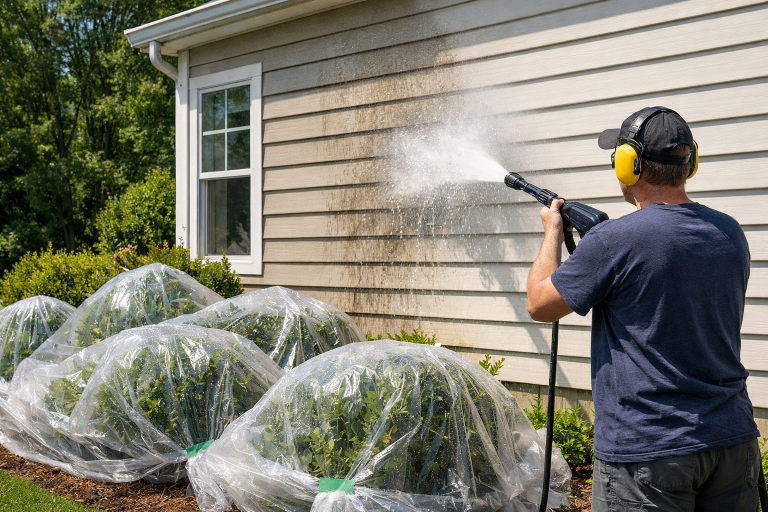
Pressure washing can suit durable masonry and some hard surfaces, but force alone does not determine a safe result. Distance, nozzle choice, spray angle, and operator control all affect impact. A concentrated stream may strip paint, mark timber, break brittle surfaces, or force moisture beneath cladding. Lower pressure and a wider spray pattern can reduce risk on sensitive areas. The correct setting should follow the surface, not a one-size-fits-all rule.
Consider Soft Washing
Soft washing uses low-pressure application, often paired with a suitable cleaning solution, to loosen grime and organic growth. This approach may suit painted cladding or other delicate finishes that could be harmed by forceful blasting. The product, dwell time, and rinse method still require care. A gentle process is not automatically safe if chemicals are poorly selected or allowed to reach plants, pets, or waterways.
Choose Products Carefully
Cleaning agents should match the stain and surface. A product suited to algae may not be appropriate for rust, dust, or grease. Labels provide directions for dilution, contact time, protective equipment, and disposal. Overly strong mixtures can discolour finishes or harm nearby vegetation. Before broad application, a small test area can reveal unwanted changes. Rinsing should follow product guidance, with particular attention to ledges and joints where residue may collect.
Protect Nearby Areas
Preparation limits avoidable mess and damage. Outdoor furniture, lights, doors, and electrical fittings should be checked before rinsing begins. Windows and vents may need suitable protection, while delicate plants can benefit from covering or pre-wetting. Downpipes and drains should be considered so debris does not create a blockage. Clear access around the house also helps workers maintain stable footing and keep hoses away from fragile garden beds.
Plan for Conditions
Weather affects both cleaning and drying. Strong wind can carry spray onto neighbouring property, while direct heat may dry cleaning solution before a surface is rinsed. Rain can complicate timing and make walkways slippery. A suitable work window allows surfaces to remain wet for the required contact time, then dry without unnecessary delay. The property’s shade, exposure, and forecast should all inform scheduling.
Compare Scope, Not Just Price
A useful quote explains which surfaces are included, what washing method is proposed, and how surrounding areas will be protected. It should clarify access requirements, preparation, and any exclusions, such as repairs or difficult stains. Comparing these details gives homeowners a fairer basis than price alone. Service information for the inspected Tauranga page identifies exterior washing in the Bay of Plenty and mentions attention to gutters, windows, and roofs.
Conclusion
The right washing method balances cleanliness with care for paint, cladding, fixtures, gardens, and drainage. Inspection helps identify risks, while surface-specific pressure, suitable products, and sensible timing support a better result. Homeowners can ask what technique is planned, which areas are covered, and how nearby property will be protected. A clear scope and careful preparation make exterior maintenance more predictable, helping a home look presentable without creating avoidable wear or damage.